Meet the Women Behind Your Care
Choosing a therapist, especially in a virtual space, can feel like a big leap. These conversations are an invitation to know the women who will be sitting with you. Not just their credentials, but how they think, what they notice in motherhood, and how they show up in the (virtual!) room. So when you’re ready, it doesn’t feel like booking with a stranger. It feels like beginning with someone who already understands.
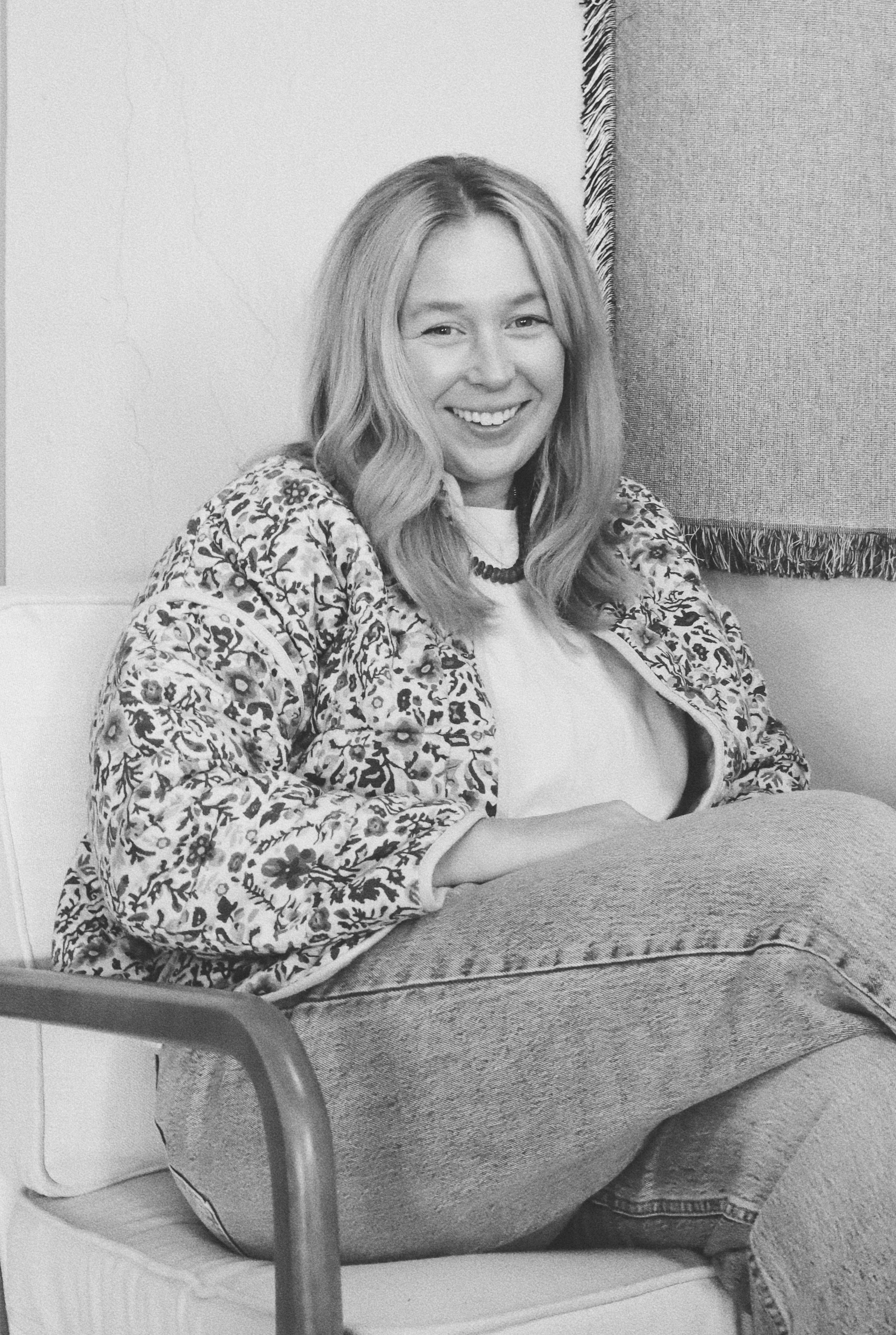
Hannah’s “Why”:
What first drew you to becoming a therapist, and what has kept you passionate about this work?
I became a therapist because I had a wonderful therapist my sophomore year of college. She walked with my family through an extremely difficult time, and I remember thinking, “I want to do what she does.” Looking back, she was an excellent clinician, but more than anything, she helped me make sense of my life when things felt completely out of control. I entered this field hoping to do the same for my clients. To help them take pieces of their lives off the shelf, examine them without judgment, and turn them into something meaningful.
As your career has evolved, what have you come to understand about the support women need during major transitions in their lives, relationships, and families?
The longer I do this work, the more I find two things to be true. First, humans are narrative creatures. We have a deep desire for our stories to have a beginning, middle, and end, which is what makes existing in the middle so challenging. Second, grief is unavoidably woven into most major transitions in some form or another, and we so often can’t name it. For the women I work with, that often means having someone help name what’s being lost and what’s still unfolding, so they can move through the middle of the story rather than just endure it.
You actually reached out to Mère because you connected with what we were building, which meant so much to us. Why Mère?
Mère came across my feed by way of an Instagram post, and I was immediately intrigued by a platform that felt both clinically astute and authentically compassionate about comprehensive women’s health. I reached out simply because I wanted to learn more about the mission. I expected an automated reply, so I was pleasantly surprised to hear back from Nicole, our founder. I never imagined I’d become part of the team! From our first meeting to now, it has been obvious that Nicole’s whole heart is in this, and that she genuinely wants to create a safe space for women to heal and grow physically, emotionally, and spiritually. The team she has assembled reflects that, and I’m deeply honored to learn from these women as clinicians and working moms.
What Hannah Sees in Mothers + Relationships:
As an LMFT, you have a unique lens into the relationships and systems surrounding a woman- not just what she is experiencing individually. What are you noticing in women, couples, and families right now?
Across the board, I’m noticing a pervasive sense of never being enough: as a mom, a wife, an employee, a woman existing in the world today. I think this echoes what people are experiencing across cultures and genders. Regardless of your walk of life, it often feels like either something is missing, or you’ve missed out on something that others around you didn’t. Our accessibility to information is both a blessing and a curse. We’re more aware than ever of how “great” things can be, but the road map to get there is muddied and elusive.
In couples, this often shows up as quiet comparison or resentment, where each partner feels they’re giving more than they’re getting. In families, it can look like everyone being stretched thin, with little room left for connection. Because we’re all shaped by the relationships around us, that sense of not being enough rarely stays contained to one person. It ripples through the whole system. That’s why I focus on the relationships and patterns around a person, not just what’s going on within the individual.
Motherhood can change a partnership in ways couples don't always expect- from intimacy and communication to resentment, division of labor, identity, and simply feeling like roommates. What do you wish more couples understood about this transition?
What I wish more couples understood is that becoming parents changes the relationship whether or not anyone planned for it. Two people who were once attuned partners are suddenly co-managing a very small, very demanding human on very little sleep, and the things that used to keep you connected (conversation, play, touch, time) are the first to go. Feeling like roommates, keeping score on who did more, or grieving who you were before is not a sign that something is wrong with you or your marriage. It’s what happens when a major transition meets two people with no time to process it. Moms often carry the weight of the mental load and a shifting sense of identity, while partners can feel sidelined or unsure how to help. Both experiences are real, and both deserve to be heard.
When is it worth asking for support rather than waiting for things to get “bad enough”?
You don’t have to wait until things are “bad enough.” If you’re having the same argument on repeat, going days without a real conversation, or feeling more like teammates running a household than partners, that’s a great time to reach out. It’s so much easier to get a map early than to repair after months of distance. Asking for support isn’t a sign that your relationship is failing. It’s a sign that you’re taking it seriously.
Hannah’s Approach to Care:
If I were sitting down with you for my first therapy appointment, what would it feel like to be in the room with you?
My focus in an initial session is that you feel emotionally safe and that your time and commitment to yourself are honored. I often tell clients it’s a bit like a first date: Do you feel heard? Comfortable? Is there room for vulnerability down the road? Research consistently shows that the strength of the therapeutic relationship is one of the best predictors of success in therapy, so I put real care into building it from our first touchpoint.
My sessions tend to move between deeper emotional work and the practical realities of everyday life. We’ll explore what’s underneath a pattern, then talk about what to do with it on Tuesday morning. My approach is attachment-driven and strengths-based: we look at how your relationships shape the way you connect with others and yourself, and we build on what’s already working to create a framework to achieve the goals we’ve collaboratively established. I am very big on a collaborative approach: you’re the expert on your life, and my role is to create space for reflection and guide you toward what you already sense is true.
How would you describe your personality as a therapist, and how do you balance creating a space where someone feels deeply supported while also helping her make meaningful change?
In the room, you can expect warmth, honesty, and a direct approach. Just as important, clients often tell me that laughter makes the hard stuff feel more manageable, and I believe a little levity can make real vulnerability easier. I’m also not going to simply nod along. I’ll support you, and I’ll also respectfully challenge you when those opportunities arise.
What Hannah Wants Mothers to Know
For the woman who knows something feels off- maybe in herself, her marriage, or her family- but keeps telling herself, “Other people have it harder” or “I should be able to handle this,” what would you want her to know?
You can have a ton of perspective about the situation you’re in and still deserve support. Pain isn’t a competition, and your struggle doesn’t need to clear some bar before it counts. The “I should be able to handle this” voice is usually a sign of how long you’ve been handling it, often alone and often for everyone else. Capable people tend to be the last ones to ask for help, because they’re so used to being the one who holds it together. Being the one who has it all together is a full-time job, and you’re allowed to take a break from it.
That nagging feeling that something is off is worth listening to. It isn’t weakness or ingratitude, and it doesn’t mean you’re falling apart. It’s information. You don’t need a crisis to justify getting curious about what’s going on, and you don’t have to have the words figured out before you walk in. That’s what I’m here for.
A Closing Word from Hannah:
“The fact that you cared enough, and had the courage, to get curious about how things could look different for you, your family, or your relationships tells me you already have a lot of the answers you’re seeking. You don’t have to carry the load alone, and I’m honored to walk this path alongside you.”