MÈRE Stories: Mary London Goshert
You grow up believing motherhood will unfold a certain way: you’ll get pregnant easily, your pregnancy will be smooth, your baby will be healthy and arrive right on time, and you’ll go home from the hospital a few days after delivery, stepping into the bliss of new motherhood.
But early in my journey, I learned I had to let go—die, really—to the expectations that culture had placed on how motherhood should look. And that wasn’t easy.
While those around me seemed to have their first and second babies without effort, my path was marked by waiting, disappointment, and an eventual diagnosis of unexplained infertility. There were medications, injections, countless appointments—and a growing, painful belief that maybe bad things just happened to me.
After years of trying, we were finally able to conceive through fertility treatment. We followed all the steps: graduated from our fertility clinic, had our first ultrasound, completed all the recommended genetic testing.
Then came a call.
Our second chromosomal test had returned “inconclusive.”
A rare thing that our doctor repeatedly told us she’d never seen before. Suddenly, we were high-risk, referred out of our OB’s care, and left with two possibilities: our baby either had triploidy, a condition incompatible with life, or the results were a fluke.
We wouldn’t know until much later, possibly not until after birth.
Still, we moved forward: cautious scans, prayers whispered through tears, a heart trying to balance hope with fear.
At 32 weeks, I began having intense chest pain. A trip to the ER led to a 24-hour protein test and reassurance that all was fine. Two days later, the pain returned—worse this time.
A nurse friend mentioned HELLP syndrome, and I went back to the hospital with that possibility in mind. I was admitted to the High Risk Pregnancy (HRP) floor, given steroids for the baby’s lungs, started on magnesium, and officially diagnosed with HELLP.
A doctor I’d never met before from another practice told me I would be delivering that day—by emergency C-section.

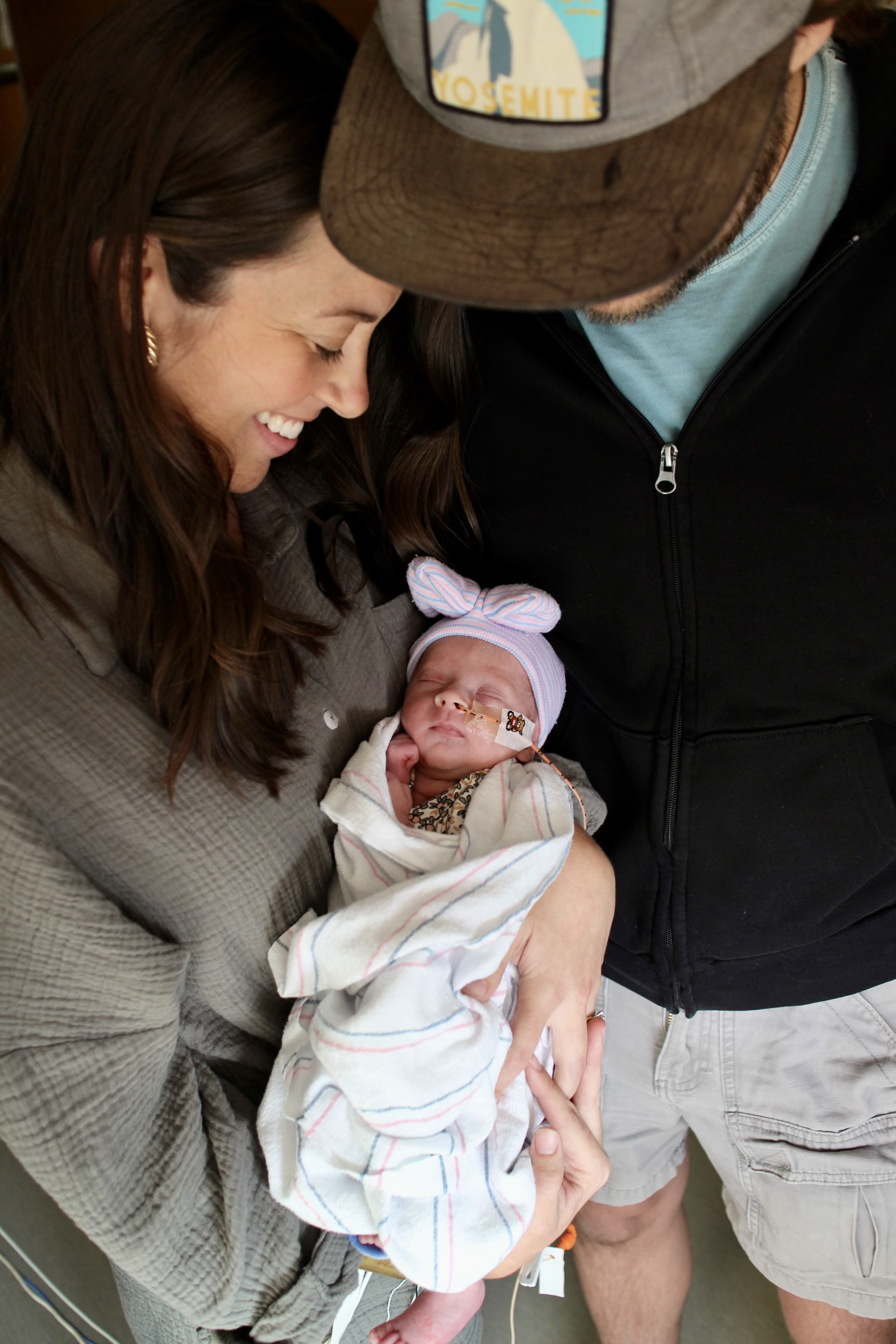
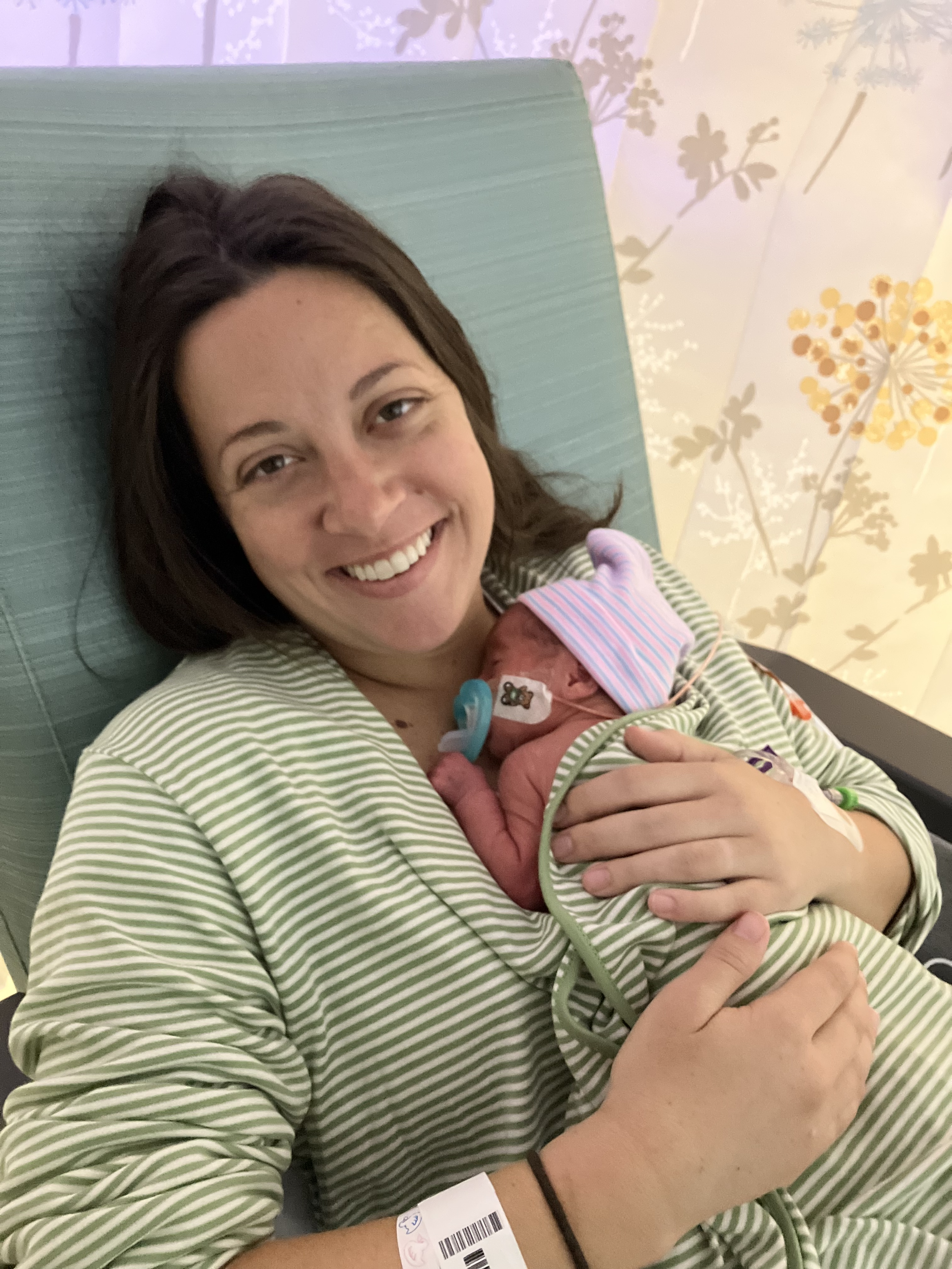
On May 28, 2023, at 3:21 p.m., our daughter, Carswell “Wells” Elizabeth Goshert, was born, weighing 3 pounds, 14 ounces. I was so heavily medicated that I remember very little. She was taken to the NICU with my husband by her side, and I returned to HRP, where I first saw her through a FaceTime call.
In those early days, I was recovering from surgery, coming off the magnesium, struggling to pump milk that barely came in—my body simply wasn’t ready at that gestational age, and was I was wheeled to and from the NICU to hold my daughter. From the beginning, she showed us her strength, sass, and determination—traits you want in a NICU baby.
She breathed on her own, received donor milk from generous women, and was later confirmed by a geneticist to be perfectly healthy.
I was discharged, but Wells remained in the hospital.
For the next six and a half weeks, we navigated life around the NICU. I pumped every three hours—because it was one of the few things I could do for her. We held her, prayed over her, and simply showed up, day after day. While we were consumed with caring for Wells, our friends and family stepped in: packing our condo, moving us into our new house, and setting up the nursery we had barely thought about. They created a space of peace and welcome, ready for her homecoming. The NICU days were long and sacred—some of the hardest, holiest days of my life.
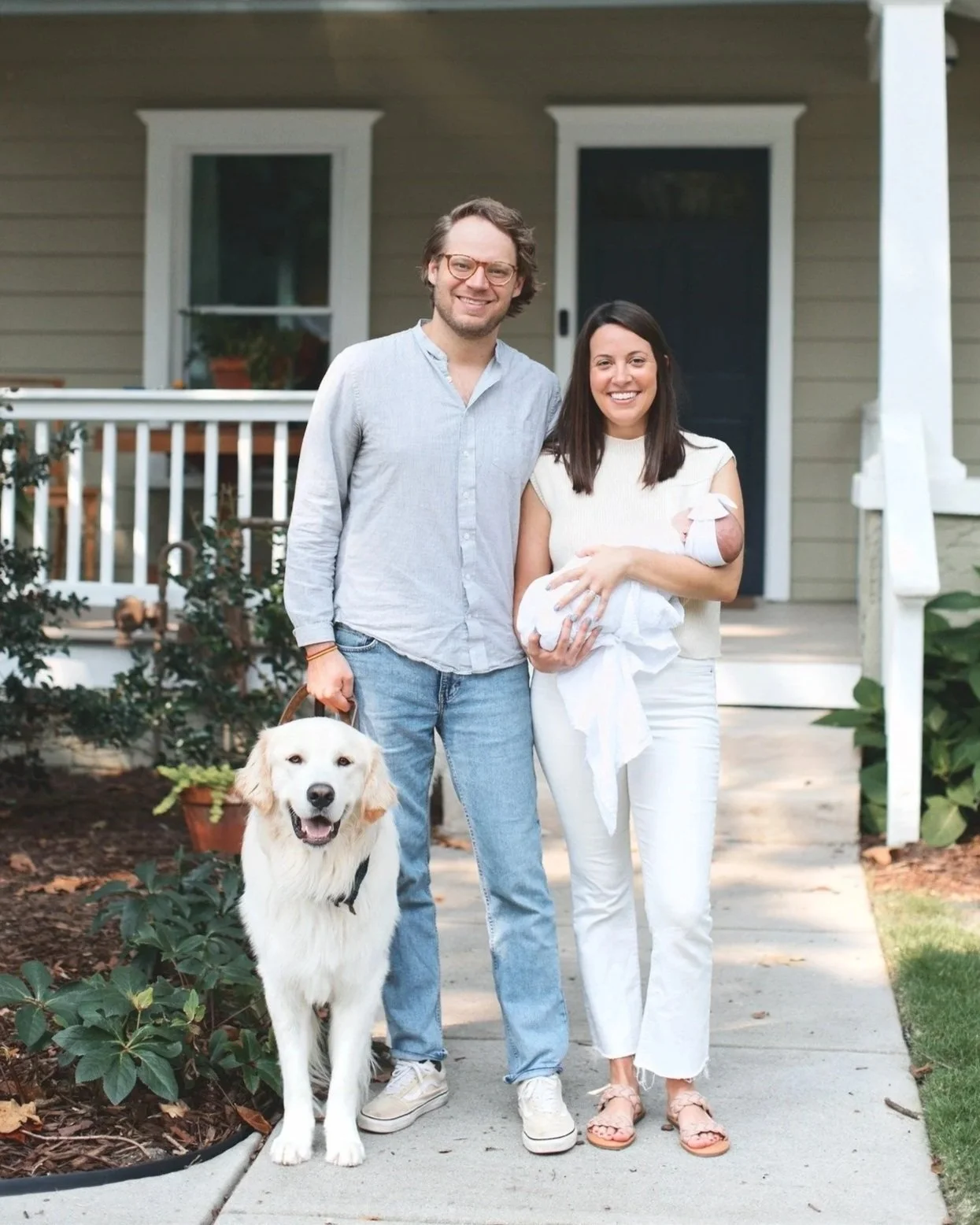
After 36 days, we finally brought our healthy little girl home.
Every part of this story carries its own weight and meaning, but ultimately, it all echoes one painful truth:
This wasn’t how it was supposed to be.
From the very beginning, I was forced to release the version of motherhood I had always believed in.
The dreams I once held so tightly unraveled before my eyes, while I watched others around me live out the story I thought would be mine.
Accepting that my path looked different was a daily struggle.
But with time, the grace of those who walked beside me, and the hard, necessary work of naming my anger and jealousy, healing slowly took root.
My story didn’t change, but my perspective did. And in that shift came an unexpected gift—a deep, enduring gratitude shaped not by ease, but by resilience.
A gratitude I might never have known otherwise.
If you had to summarize your journey in motherhood with all its challenges, how would you describe it now? How have you found a way to reclaim your strength or identity? What have you learned?I think this question is best answered by a story that I think about often:
A friend and I were talking about the challenges of solo parenting while our husbands were out of town for work when someone nearby chimed in, “Whoa, those days with little ones are so hard!” I smiled and replied, “But so much fun!” My friend raised an eyebrow and asked, “Is Wells ever difficult?”
In that moment, I realized just how much perspective shapes our experience. Of course my almost-two-year-old is difficult - she throws tantrums, doesn’t know how to fully communicate, and tests every boundary. But that’s not what defines my view of parenting her.
More than anything, my journey has shaped a deep sense of gratitude. I don’t feel like I have to do this - I feel like I get to. The NICU nights, the meltdowns, the many hours spent pumping - they're real, but they fade into the background when compared to the joy and honor of being a mom.
What advice or words of encouragement would you give another mom walking through a similar chapter? Lean in.
Even if your story looks nothing like you imagined, it’s still yours.
Own it, wrestle with it, grow through it—and allow it to shape you into the person you were always meant to become.
How has your journey changed you, both in ways you expected and in ways you never could have imagined?Much of my story unfolded in unexpected ways—and so too have the ways it has transformed me.
Yet, in the midst of it all, motherhood has felt like the most familiar part of me.
It has brought a deep sense of contentment, a longing to slow down, a deeper empathy for the fullness of others’ stories, and countless quiet shifts that continue to shape who I am becoming.
— Mary London Goshert
INTERESTED IN SHARING A STORY ON THE MÈRE JOURNAL?