Meet the Provider: Becca Hamilton
Meet the Women Behind Your Care
Choosing a therapist, especially in a virtual space, can feel like a big leap. These conversations are an invitation to know the women who will be sitting with you. Not just their credentials, but how they think, what they notice in motherhood, and how they show up in the (virtual!) room. So when you’re ready, it doesn’t feel like booking with a stranger. It feels like beginning with someone who already understands.
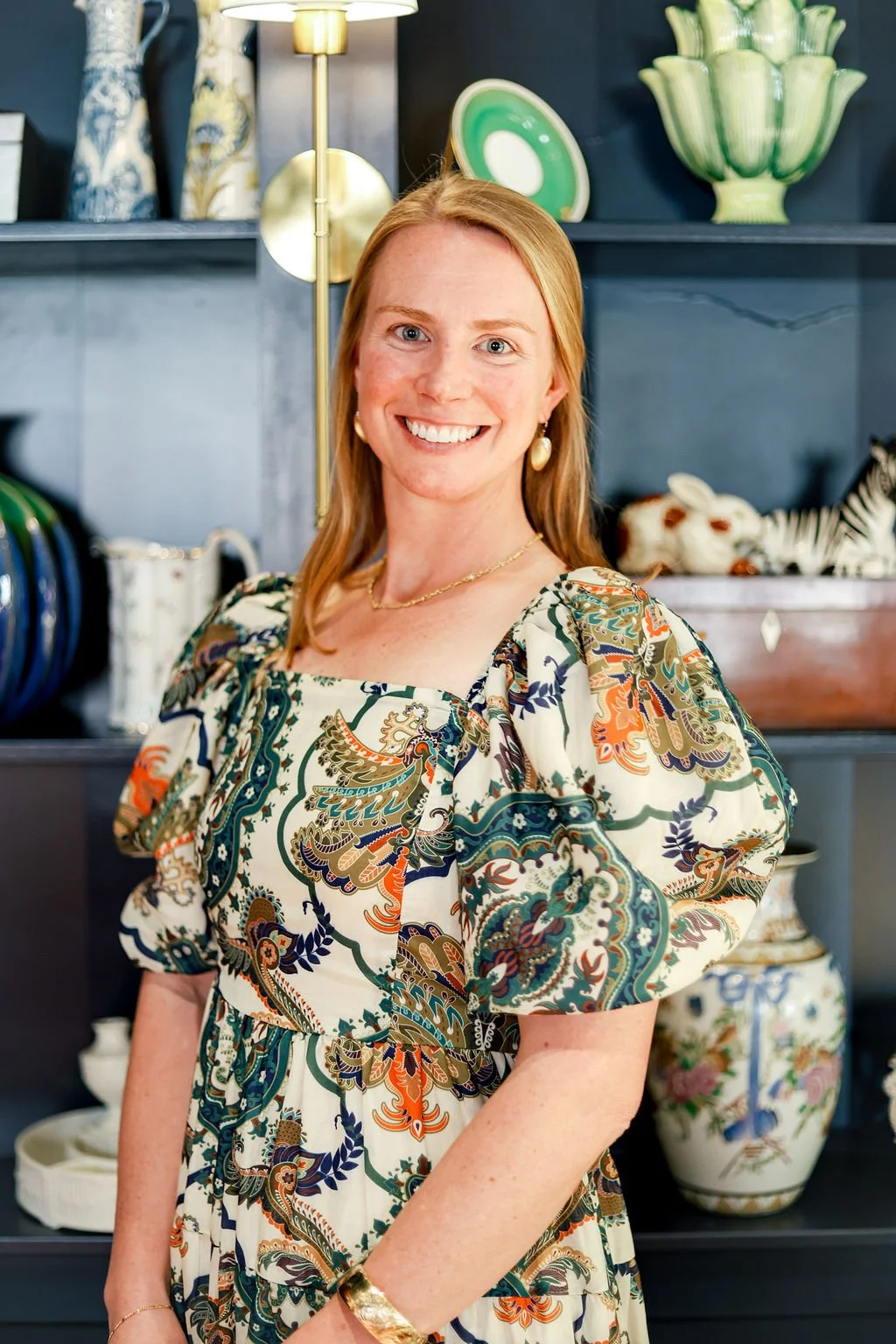
Becca’s “Why”:
You shared that you feel called to this work because you are a mother yourself—How has your own experience of motherhood shaped the way you care for other women?
Motherhood is not something I did anything to deserve, and I hold that awareness with deep humility. Because of that, my heart is especially tender toward women who are grieving the “not yet” and longing to experience it.
As I moved through pregnancy, birth, and postpartum, I became curious about what was happening within me emotionally, neurologically, and physically. I was drawn to learning about how the brain and body change in the transition to motherhood, and through my own therapy and study of the maternal mind and body, something began to shift.
It became important for me to offer myself grace and permission, to soften expectations, honor the intensity of the transition, and trust what was unfolding within me. What is unfolding within me as a mother is a deeper awareness of both my capacity and my limits. I see more clearly that I am able to care for new life, to respond, and to nurture. And at the same time, I feel more human than ever before. More aware of my own needs, my dependence, and the places where I cannot do it all on my own.
I feel a deep calling to meet women in this transition with that same grace, holding space for the complexity, the grief, the longing, and the becoming.
Was there a moment, experience, or realization that shaped your desire to support women in motherhood?
The entire experience of trying to conceive, pregnancy, birth, and motherhood has felt both awe-inspiring and deeply engaging for me.
I find myself continually drawn to learning about the transition into motherhood, and I value sharing that understanding with clients as a way to remind them they are not alone if they are experiencing challenges and that relief is possible.
One moment that stands out came during the postpartum months with my first child. I was reading
“This Isn’t What I Was Expecting” by Karen Kleiman, and Karen described the innate need mothers have to be “mothered” during the perinatal period. That realization gave language to my own needs and helped me approach myself with more honesty and care. That same experience shaped the way I show up with clients. I aim to offer a space where they feel emotionally held, a place that is safe, compassionate, and steady, especially during a season that can feel both tender and greatly overwhelming.
What keeps you in this work today?
I share with clients every day that this work is not just a profession that I am passionate about, but it is a calling.
I really do feel called to walk alongside women as they experience intense seasons of suffering, grief, and pain and as they celebrate with hope and joy. To journey with a client through sessions as they name and share their deepest places in relationship with the world, others and themselves, is such an honor.
And as Kurt Thompson shares, when we are vulnerable with our deepest places, that is where hope is really found.
I also am very invigorated by learning and staying curious about new techniques to help my clients as they overcome trauma, regulate mood disturbance, uphold healthy boundaries in relationships, and experience peace with themselves and loved ones.
What Becca Sees in Mothers:
You speak so honestly about the coexistence of joy, gratitude, weakness, and inadequacy—how do you see that emotional duality showing up in the women you work with?
In the women I work with, including those preparing to become mothers, emotion is rarely one-dimensional; emotion usually exists in a meaningful duality.
Love and Overwhelm
Gratitude and Grief
Joy and Anxiety
…can all coexist in the same moment. A woman may feel deeply connected to her child while simultaneously feeling disconnected from herself, no longer recognizing her own needs, moving through her day on autopilot, or struggling to access a clear sense of who she is. Alongside this, she may feel uncertain in her decisions, second-guessing even small choices and searching for reassurance as she learns to trust herself in this new or evolving role.
This is not a sign that something is wrong, but it is a reflection of the profound identity shift that occurs in the transition to motherhood.
We make space for these seemingly contradictory emotions, understanding that two things can be true at once, and that honoring this complexity is an essential part of healing. The healing process can feel difficult which is why growth happens one session at a time.
What feels misunderstood, minimized, or often left unspoken in motherhood?
The presence of grief without a clear loss comes to mind.
Ambiguous loss in motherhood often shows up as a quiet, persistent sense of longing or heaviness that can be difficult to name. There is no single event to point to, yet something feels different or out of reach in the transition to motherhood. It may reflect the identity transition of becoming a mother and the grief of no longer feeling fully anchored in a prior sense of self. It can also include changes in relationships, as roles and emotional dynamics shift, creating both closeness and distance. Many women also describe a felt disconnection from their bodies after pregnancy and birth, or a loss of emotional steadiness as they navigate new levels of intensity and responsibility.
Because nothing is explicitly “gone,” this grief often goes unspoken, even as it is deeply and consistently felt.
Where do you see women struggling the most—and what do you wish more people understood about that?
I think it is helpful to start with naming the range of challenges that exist in perinatal experiences.
Women trying to conceive may feel “behind,” exhausted from holding hope and uncertainty while longing for a family. Women navigating infertility often name the intensity and sacrifice of a season marked by waiting, medicalization, and emotional endurance. Women experiencing pregnancy loss or infant loss carry the sharp, sharp grief of absence alongside love that has nowhere to go. Others face strain in their relationships as the demands of motherhood and daily life pull attention, energy, and connection in different directions. Some women experience mood disturbance and quietly wonder if they will ever feel like themselves again, or if a steadier emotional ground will return. In mid-life, many are also holding the dual role of caring for children while beginning to care for aging parents, feeling stretched across generations.
Across all of these experiences, a common thread is a longing for greater peace, a sense of being enough, and a belief that they will be able to move through what is in front of them.
I hope that more people understand that the longing for peace in perinatal and maternal life is not a desire for a “perfect” or easy life, it is a longing for internal steadiness in the midst of ongoing demands that often cannot be resolved or removed.
It is not always about wanting everything to calm down externally. It is about wanting to feel:
anchored rather than constantly bracing
assured that they are enough, even when things feel incomplete
less alone inside the uncertainty
able to trust themselves in the middle of complexity
And perhaps most importantly: the longing for peace is not a sign of weakness or lack of gratitude.
It is a very human response to sustained emotional load, identity transition, relational strain, and responsibility that has few pauses. It reflects a nervous system asking for safety, not a life that is being done “wrong.” At its core, it may be less about wanting peace as a destination, and more about wanting moments of internal permission such as, “I am safe, even here. I am enough, even now.”
Becca’s Approach to Care:
You describe offering a space where feelings are “honored, not fixed”—what does that look like in practice when you’re sitting with a client?
In session, honoring a client rather than fixing them can look like slowing down to stay with their lived experience rather than moving quickly into solutions or reframing.
A pregnant client expressing constant worry might be met with curiosity about how uncertainty feels for her rather than immediate reassurance that everything will be okay.
A postpartum client describing a loss of identity may be supported in naming the grief of not recognizing herself, while also exploring what feels distant and what is being mourned.
When a mother feels irritable with her partner, the focus may shift from correcting the reaction to understanding the emotional load and relational dynamics underneath it. Ambivalence about motherhood, emotional numbness, or grief after loss are all approached as meaningful responses to profound transition rather than problems to eliminate.
Across these moments, I aim to communicate that the client’s experience makes sense in context, that nothing in them needs to be “fixed” in order to be worthy of care, and that healing often unfolds through being deeply seen, understood, and not alone in what they are carrying.
With that said, I value creating treatment plans with clients that allow them to see the hope of relief, healing, growth or adjustment that can occur over several sessions. It is important to let my clients know that they do not have to feel this way forever.
What does it mean, in practice, to “come alongside” someone in their story?
To come alongside someone in their story means to enter their experience with empathy, presence, respect, and humility, rather than standing above it or trying to direct it toward a preferred outcome.
It is a stance of walking with the client as they make meaning of what they are living through, especially in moments that feel confusing, painful, or unfamiliar.
Instead of interpreting their story for them or moving quickly to “fix” what feels hard, I stay close to their emotional experience, helping them put language to what has often been carried alone.
Psychodynamically, it also means holding awareness of how past and present experiences shape the story as it unfolds, while remaining anchored in the here-and-now relationship.
This also means honoring pacing, supporting a sense of safety and choice, and staying attuned to what feels manageable in the moment. It looks like moving slowly enough for the nervous system to stay regulated, offering language that reduces shame, and helping clients build capacity rather than pushing for insight too quickly.
How do you help clients move from feeling overwhelmed by the different chapters of motherhood to feeling more grounded and self-trusting?
In my work, clients often begin in a place of overwhelm where everything feels like too much, emotions feel intense or confusing, and it is hard to slow things down enough to make sense of what is happening.
In session, I help create space to pause and notice what is actually being experienced in the moment, such as tightness in the chest, racing thoughts, exhaustion, or emotional shutdown, so the experience becomes more understandable and less consuming.
From a trauma-informed and mindfulness-based approach, this slowing down helps clients feel safer in their bodies and less swept up by their emotions.
From an attachment-based lens, we also begin to explore what might be underneath the feeling, such as grief, unmet needs, identity shifts, or relational patterns that are getting activated.
Over time, clients often begin to recognize their internal signals earlier, understand their emotional responses in context, and feel less confused by them.
This is where grounding and self-trust develop, not because life becomes easy, but because they begin to stay connected to themselves and believe the truth about who they are, even when things feel hard.
Becca’s Clinical Focus
You work closely with trauma and EMDR—how do you help women safely process and move through experiences that may feel overwhelming or stuck?
When I think about trauma work, I often picture a tapestry. Each woman’s story is woven over time, but sometimes barbed wire gets caught in the weave. These are the experiences that feel overwhelming or stuck. Instead of lying smoothly within the story, they snag and make it harder to move forward without pain.
In my work, especially using EMDR, I help women gently return to those places, not to relive them, but to tend to what is caught. We move slowly, with safety and grounding, loosening what has been gripping the fabric of their story. As this happens, what once felt stuck begins to shift, both in the body and in the beliefs they carry about themselves.
For example, a mother who feels a wave of panic during pediatric appointments might, in session, come back to a difficult birth experience while staying grounded in the present. As we move slowly, her body begins to recognize that the danger has passed, and the intensity of that panic starts to soften.
Or a woman who carries the belief “I’m not enough” may trace that feeling back to earlier experiences where she felt unseen or criticized. With support and regulation, we revisit those moments in a way that allows her to process them differently, so they no longer hold the same weight.
As we process these memories with support, their intensity decreases, and those beliefs begin to change. It is not about forcing new thoughts, but allowing truer ones to emerge, beliefs like “I am safe now,” “I did the best I could,” or “I am capable.”
Moving forward begins to look like more space between trigger and response, less pull from old patterns, and a more compassionate relationship with oneself.
The goal is not to erase the past, but to help it settle so it no longer defines the present.
How do you approach things like intrusive thoughts or anxiety in a way that feels both effective and compassionate?
I approach intrusive thoughts and anxiety with the understanding that they are not random or a sign that something is wrong with the person, but meaningful signals from a nervous system that is trying to protect.
One way I work with this, especially in EMDR, is through distancing techniques. For example, instead of asking a client to fully step into an intrusive thought or distressing image, I might invite her to imagine it at a distance, like watching it on a screen, placing it in a container, or turning down the intensity like a volume dial. This creates enough space so she can stay grounded while still engaging with what is there.
For a mother experiencing intrusive thoughts about harm coming to her baby, this might look like noticing the thought without immediately attaching meaning or fear to it, and then visualizing it as something passing by rather than something that needs to be acted on. From that place of distance, we can begin to process what the thought is connected to, often underlying anxiety, fear, or a need for control or safety.
This approach is both effective and compassionate because it respects the nervous system’s limits. It allows clients to build tolerance gradually, rather than becoming overwhelmed, and helps them relate to their thoughts with more curiosity and less fear. Over time, the thoughts often lose their intensity and frequency, and clients feel more grounded and in control of their responses.
If I assess that the presentation is consistent with OCD and the intrusive thoughts are causing significant distress, I also consider evidence-based referral or collaboration for Exposure and Response Prevention (ERP). In those cases, I may refer to or coordinate care with Mary Hathaway, who specializes in ERP treatment.
What Becca Wants Mothers to Know
When a mother is in the thick of it—overwhelmed, anxious, or feeling like she’s “failing”—what would you want her to hear from you?
I want you to know that I am not surprised you feel this way, but I know both personally and professionally how awful it can feel to be down, irritable, anxious and/or exhausted.
More often than not, this is what it looks like when a woman is carrying more than she has space, rest, or support for. Nothing about your experience means you are moving through this season wrong. It usually means you have walked through a lot and are giving a lot, with a nervous system that has been asked to stay “on” for too long.
And I want you to hear this clearly: you do not have to earn care by getting through this first. You do not have to be more grounded or more “together” to deserve support. We can start right where you are, even if it feels messy or hard to name.
In our work, I am not trying to pull you out of your experience, but stay with you in it by helping you make sense of what is happening inside you and slowly supporting you in finding steadier ground and a little more trust in yourself again.
What does healing or growth actually look like in your work (not perfection, but progress)?
Progress in our work is not about perfection or feeling better all the time.
It is about gradual meaningful shifts that often show up in small lived moments, especially in the perinatal period.
You may still experience anxiety or depression related symptoms connected to your baby, sleep, feeding, your body, or your identity as a mother, but over time they do not take over in the same way. There is a little more space to pause, breathe, and notice what is happening without immediately assuming something is wrong or that you are failing.
It can also look like changes in your day to day with your baby and yourself. Moments that once felt overwhelming may start to feel more manageable. You might find yourself able to soothe your baby without the same level of panic, stay present a bit longer in hard moments, or name “this is hard” without it turning into “I cannot do this.” Even when there are ruptures such as snapping, shutting down, or feeling flooded, you are able to come back to yourself and your baby more quickly with less shame and more gentleness.
We also use structured tools like anxiety, depression, and OCD assessments to help us understand what you are carrying and how it is shifting over time. These are not about labeling you or defining you. They simply help us track your experience alongside what you are sharing in session so care can stay responsive and targeted to what you actually need.
A Closing Word from Becca:
“If you’re in a hard season of motherhood right now you are allowed to come as you are and name how challenging it is. You are going to walk through this, momma or momma-to-be!”